

Mold Remediation vs Crawl Space Encapsulation: Which Solves the Root Cause?
Mold remediation addresses existing mold, while crawl space encapsulation focuses on controlling moisture and humidity that can contribute to recurring mold growth. If moisture is the root cause, long-term results may require a combination of remediation and moisture control, including vapor barriers, drainage, sump pumps, dehumidifiers, or waterproofing.

Summary:
Mold remediation addresses existing mold contamination, but removing mold alone may not solve the moisture problem that caused it.
Crawl space encapsulation helps control ground moisture, outside air, and humidity, but it should not be used to simply cover existing mold or active water intrusion.
A complete moisture control plan may combine encapsulation with drainage, sump pump installation, dehumidification, waterproofing, insulation replacement, and mold remediation depending on the crawl space conditions.
Mold remediation and crawl space encapsulation solve different parts of the same moisture problem. Mold remediation focuses on removing existing mold and addressing the conditions that allowed it to grow. Crawl space encapsulation focuses on controlling moisture, humidity, and outside air so the crawl space is less likely to develop the same problems again.
If your crawl space already has visible mold, simply encapsulating it does not remove the mold. On the other hand, removing mold without correcting ongoing moisture can leave the conditions in place for mold to return.
That is why the right question is not always which service is better. It is which problem is happening in your crawl space, what is causing it, and which combination of solutions is needed to address it.
For homeowners in Raleigh, Cary, Garner, Apex, Smithfield, Knightdale, and surrounding North Carolina communities, moisture control can be especially important. Humid conditions, groundwater, plumbing leaks, poor drainage, and damp soil can all contribute to elevated crawl space humidity.
Mold Remediation and Crawl Space Encapsulation Do Different Jobs
The simplest way to understand the difference is to look at what each service is designed to accomplish.
Mold remediation addresses a problem that already exists. If mold is growing on crawl space wood, insulation, structural components, or other materials, remediation involves identifying the affected areas, removing or treating contaminated materials as appropriate, and addressing the moisture conditions that support continued growth.
Crawl space encapsulation is a moisture control strategy. It typically involves sealing the crawl space from the ground and outside environment with a durable vapor barrier system, addressing openings and moisture entry points, and controlling humidity inside the space.
In many situations, these services work together rather than replacing one another.
If mold is already present, remediation may be needed first or as part of the overall project. Encapsulation can then help address the moisture conditions that contributed to the problem.
What Is Mold Remediation?

Mold remediation is the process of addressing mold contamination and the conditions that allow mold to grow.
Mold needs moisture to grow. That moisture can come from several sources, including:
High humidity
Damp soil
Plumbing leaks
Groundwater
Poor crawl space drainage
Condensation
Foundation seepage
Exterior water intrusion
Wet insulation or building materials
A proper remediation approach should therefore look beyond the visible mold.
Cleaning a dark patch from a piece of crawl space wood may make the area look better, but if the wood continues to remain damp, the underlying problem has not been solved.
This is one reason moisture assessment is so important when dealing with crawl space mold.
What Is Crawl Space Encapsulation?
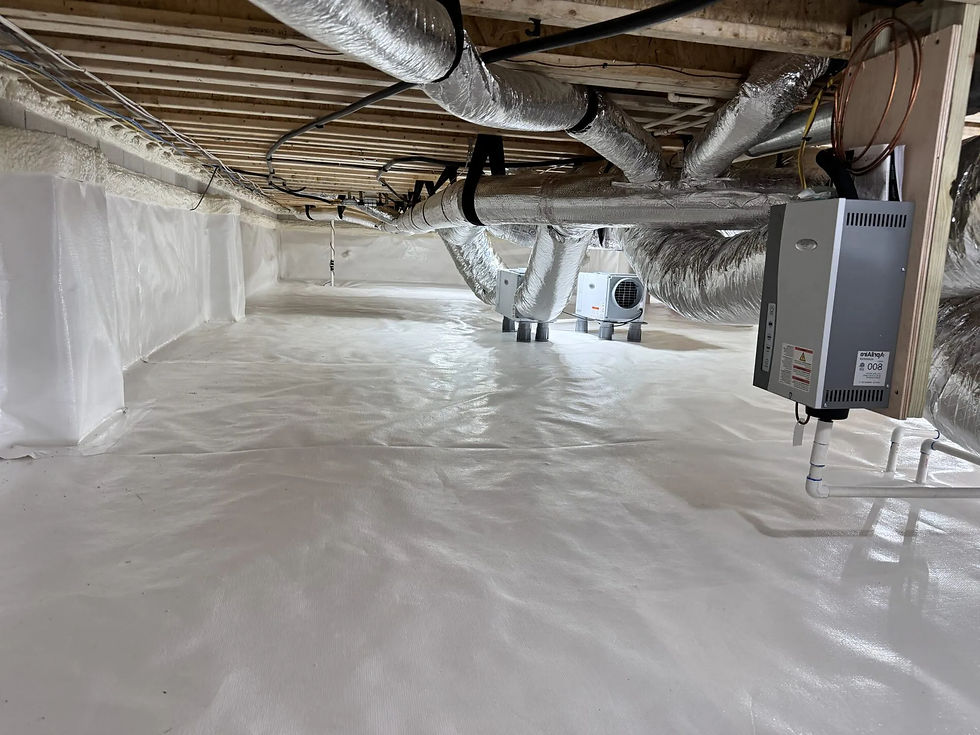
Crawl space encapsulation involves creating a controlled environment that is separated from the damp ground and outside air.
A typical encapsulation system can include a heavy-duty vapor barrier installed over the crawl space floor and up foundation walls, sealing appropriate seams and penetrations, and addressing vents or other openings as part of the overall moisture control design.
Depending on the crawl space, additional components may be necessary.
A dehumidifier can help control humidity. A sump pump may be needed when groundwater collects in the crawl space. A drainage system can help direct water toward an appropriate discharge point. Insulation may also need to be replaced if existing insulation has become wet, damaged, or contaminated.
The goal is not simply to cover the floor with plastic. A properly planned encapsulation system addresses how moisture is entering and moving through the crawl space.
Which One Solves the Root Cause?
In many cases, crawl space encapsulation and moisture control address more of the long-term cause, while mold remediation addresses the existing consequence.
Consider a crawl space with high humidity and visible mold on wooden joists.
Mold remediation can address the mold.
But if humidity remains high, the conditions that allowed the mold to develop may still exist.
Encapsulation, combined with appropriate moisture control and humidity management, can help reduce those conditions. If the crawl space also has standing water, a drainage system or sump pump may be needed. If insulation is wet or damaged, insulation replacement may also be necessary.
This is why there is rarely a single universal solution.
Problem | Primary Solution | May Need Additional Work? |
Visible crawl space mold | Mold remediation | Yes, moisture source should be addressed |
Damp ground | Vapor barrier or encapsulation | Possibly drainage improvements |
Standing water | Crawl space drainage system or sump pump | Waterproofing and moisture control may also be needed |
High humidity | Dehumidifier and moisture control | Encapsulation may improve long-term control |
Wet or damaged insulation | Insulation replacement | Moisture source should be corrected |
Groundwater intrusion | Drainage and waterproofing | Sump pump may be appropriate |
Repeated mold growth | Moisture control plus remediation | Encapsulation may be part of the long-term solution |
The most effective plan depends on what is actually happening in the crawl space.
Why Mold Can Keep Coming Back
Mold does not appear randomly. Moisture is usually part of the equation.
A crawl space can remain damp even when there is no obvious flooding. Warm, humid outdoor air can enter through vents and openings. Moisture can also move upward from exposed soil.
If that moisture raises the relative humidity inside the crawl space, condensation and damp building materials can become more likely.
A small plumbing leak can create another problem. Water may remain unnoticed for weeks or months, particularly if the crawl space is difficult to access.
This is why simply treating visible mold may not be enough.
If the moisture source remains, mold can return.
How a Vapor Barrier Helps Control Crawl Space Moisture
A vapor barrier is one component of a crawl space moisture control system.
Bare soil can release moisture into the crawl space. Covering the ground with an appropriate vapor barrier can help limit that moisture from entering the space.
However, a vapor barrier is not automatically the same thing as full crawl space encapsulation.
Encapsulation may include additional steps such as sealing the barrier at walls and penetrations, addressing vents and openings, improving drainage, and controlling humidity.
The correct system depends on the condition and design of the crawl space.
For homeowners in Clayton, Fuquay-Varina, Willow Spring, and other areas around the Triangle, an assessment can help determine whether the problem is primarily ground moisture, drainage, humidity, water intrusion, or a combination of several issues.
When Crawl Space Drainage Is the Real Problem
Sometimes the root cause is water entering the crawl space rather than humidity alone.
You may notice:
Standing water after heavy rain
Muddy areas
Damp foundation walls
Water stains
Persistent musty odors
Wet insulation
Efflorescence or mineral deposits
Repeated moisture near foundation walls
In these situations, encapsulation alone may not be enough.
A crawl space drainage system can help collect and direct water away from vulnerable areas. Depending on the property, a sump pump may also be necessary to move collected water to an appropriate discharge location.
Water management should happen before or alongside encapsulation when active water intrusion is present.
Otherwise, sealing a space without properly addressing water entry can leave a major problem unresolved.
When Is a Sump Pump Needed?
A sump pump is designed to remove collected water from a sump basin and discharge it away from the crawl space.
It can be useful for properties that experience groundwater intrusion, drainage issues, or recurring water accumulation.
A sump pump is not a replacement for every other moisture control measure. It addresses collected water, while a vapor barrier addresses moisture from the ground and a dehumidifier helps control humidity.
That distinction matters.
If a crawl space has standing water, installing a dehumidifier alone will not solve the problem. Similarly, covering the ground with a vapor barrier will not necessarily stop water that is actively entering through the foundation.
The system should match the source of moisture.
What Role Does a Dehumidifier Play?
A crawl space dehumidifier can help control humidity after other moisture sources have been addressed.
This is important because encapsulation does not automatically eliminate every source of humidity. Small amounts of moisture can still enter the space, and humidity can remain elevated if the environment is not properly controlled.
A properly selected dehumidifier can help maintain a more stable humidity level.
It is particularly useful in humid climates, where outdoor conditions can make moisture management challenging throughout much of the year.
The goal is to maintain an environment that is less favorable to mold growth and less likely to cause moisture-related damage to building materials.
What Happens to Moldy Crawl Space Insulation?
Insulation should be evaluated based on its condition and the extent of contamination.
If insulation has become wet, damaged, deteriorated, or contaminated, replacement may be more appropriate than simply leaving it in place.
Replacing insulation without addressing the moisture problem, however, can result in the same issue happening again.
This is why insulation replacement is best considered part of a broader moisture management plan when moisture or mold is involved.
The sequence might involve identifying the moisture source, correcting drainage or water intrusion, addressing mold, replacing damaged insulation, and then implementing long-term humidity and moisture controls.
Should You Encapsulate a Crawl Space With Mold?

Not without addressing the existing mold appropriately.
Encapsulation can help create a better-controlled crawl space environment, but it is not designed to simply hide existing mold underneath a barrier.
If mold is visible, the crawl space should be evaluated so the affected materials and moisture conditions can be addressed appropriately.
This is particularly important when mold is widespread, when structural materials are affected, or when the source of moisture is unclear.
Trying to cover up the problem can make future inspection and maintenance more difficult.
Can Encapsulation Prevent Mold From Returning?
It can help reduce the conditions that allow mold to grow, but no moisture control system should be described as a guarantee that mold can never return.
Successful mold prevention depends on controlling the moisture sources.
A well-designed encapsulation system can reduce moisture entering from the soil and outside environment. Adding a dehumidifier can help control humidity. Drainage and sump pump systems can address water accumulation.
Together, these measures can create a much more controlled environment than an open, damp crawl space.
If you are dealing with recurring mold in Raleigh, Durham, Chapel Hill, or nearby communities, the useful question is not just how to remove the mold. Ask why the crawl space keeps becoming damp.
A Practical Approach to Solving Crawl Space Moisture
If you find mold in your crawl space, avoid jumping immediately to one service.
Start with an assessment.
Look for visible water, damp soil, wet insulation, plumbing leaks, foundation seepage, condensation, and areas where humidity may be accumulating.
Then determine what needs to happen.
A property might need only a vapor barrier and humidity control. Another might need drainage and a sump pump before encapsulation. A crawl space with established mold may need remediation and damaged insulation replacement in addition to moisture control.
This approach is more effective because it treats the crawl space as a system.
If you are dealing with a damp or mold-prone crawl space in Smithfield, Knightdale, Raleigh, Cary, Garner, Apex, Holly Springs, Durham, Chapel Hill, Clayton, Fuquay-Varina, or Willow Spring, consider having the moisture source identified before choosing a solution.
A proper evaluation can help determine whether you need crawl space encapsulation, vapor barrier installation, drainage, sump pump installation, mold remediation, insulation replacement, dehumidification, or a combination of these services.
Crawl Space Waterproofing and Moisture Control
Waterproofing and moisture control are closely related, but they are not identical.
Waterproofing generally focuses on preventing or managing water intrusion. Moisture control is broader and can include humidity, condensation, ground moisture, drainage, and air movement.
A crawl space can have a moisture problem without having obvious standing water.
For example, a crawl space may stay damp because of exposed soil and humid air. Another may have an active drainage problem that becomes obvious after heavy rain.
That is why the source needs to be identified before selecting the solution.
Why Treating the Cause Matters for Your Home
The crawl space is part of your home, even though you may rarely enter it.
Moisture can affect insulation, wood components, stored materials, and the overall condition of the space. Persistent dampness can also create an environment where mold and other biological growth are more likely.
The goal of moisture control is therefore not simply to make the crawl space look cleaner.
It is to create a drier, more controlled environment and address the conditions that created the problem in the first place.
That is also why mold remediation and crawl space encapsulation should not always be viewed as competing services.
One addresses existing contamination. The other can address ongoing environmental conditions.
Frequently Asked Questions
How can I tell if my crawl space has too much moisture?
Common warning signs include musty odors, condensation, damp insulation, standing water, visible mold, wet soil, water stains, or wood that appears persistently damp. A professional moisture assessment can provide more reliable information than relying only on visible signs.
Does crawl space encapsulation increase home value?
There is no universal amount that encapsulation adds to a home's value. Its benefits are more directly related to moisture control, crawl space condition, and maintenance. If a home has an existing moisture problem, correcting it can be valuable to the property's overall condition.
How long does crawl space encapsulation last?
The lifespan depends on the quality and thickness of the materials, installation, environmental conditions, and whether the crawl space is properly maintained. The vapor barrier should also be checked periodically for damage, loose seams, or other issues.
Can homeowners inspect their crawl spaces themselves?
Basic visual inspection can help identify obvious problems, but crawl spaces can have safety hazards, limited access, electrical components, structural concerns, and contaminated materials. If you find significant mold, standing water, damaged structural components, or other concerning conditions, professional evaluation is appropriate.
Is a musty crawl space smell always caused by mold?
No. Musty odors can be associated with mold, mildew, damp insulation, wet wood, soil moisture, or other moisture-related conditions. An odor alone does not identify the exact source, so the crawl space should be inspected rather than assuming mold is responsible.
The Bottom Line
Mold remediation and crawl space encapsulation are not interchangeable solutions.
Mold remediation addresses existing mold and contaminated materials. Encapsulation focuses on creating a more controlled crawl space environment by limiting moisture and outside air entering the space.
If mold is growing because of ongoing moisture, the most effective long-term approach usually requires addressing both problems. That could involve mold remediation, vapor barrier installation, crawl space drainage, sump pump installation, dehumidification, waterproofing, or insulation replacement depending on what is causing the moisture.
The root cause is the moisture.
Removing mold without controlling moisture can leave the underlying conditions in place. Encapsulating a crawl space without properly addressing existing mold or active water intrusion can also leave important problems unresolved.
For homeowners throughout Smithfield, Knightdale, Willow Spring, Raleigh, Cary, Garner, Apex, Holly Springs, Durham, Chapel Hill, Clayton, and Fuquay-Varina, the best starting point is a crawl space assessment that identifies where the moisture is coming from and what the space needs to stay dry.


Comments